Engine rebore
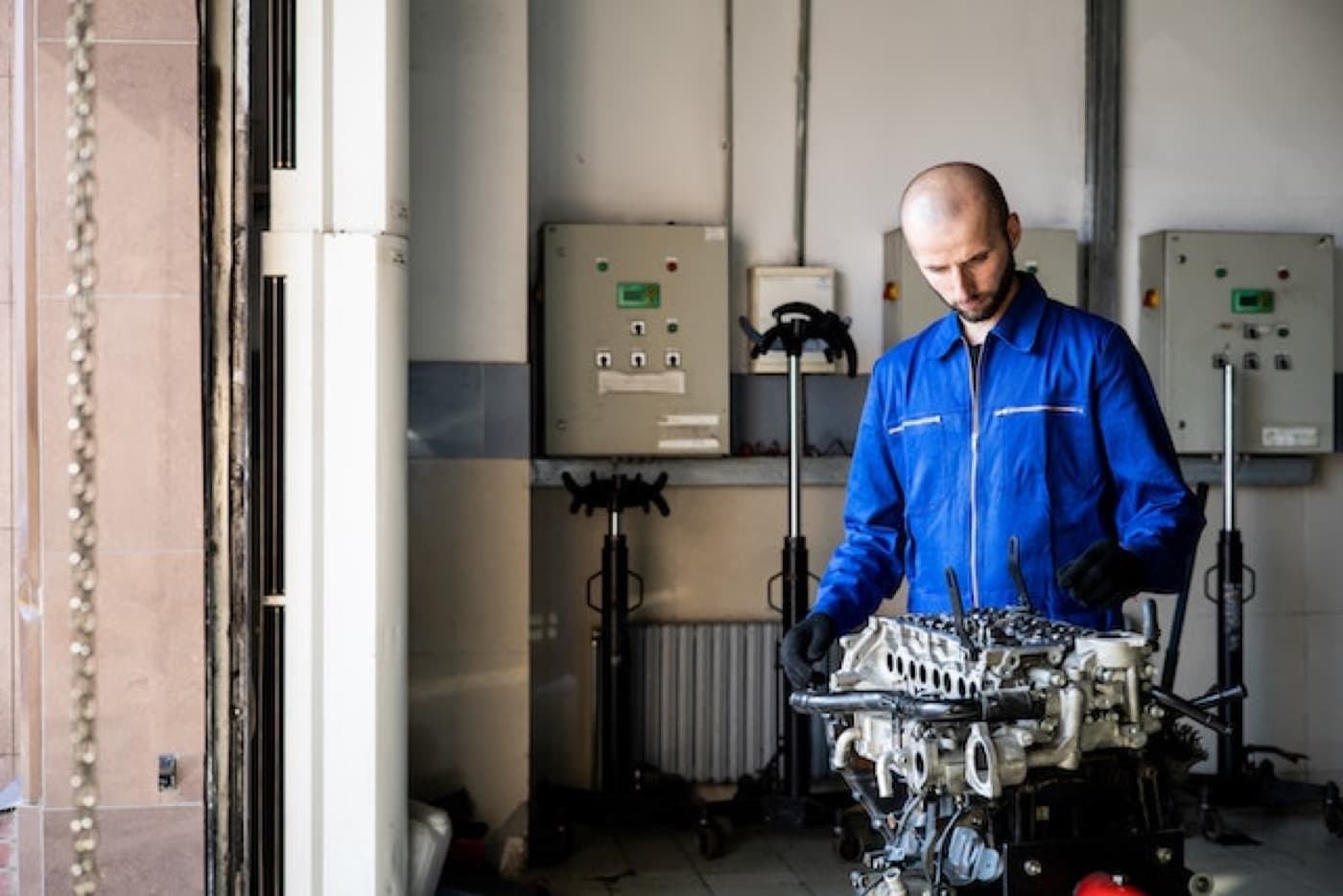
An engine rebore in Sydney starts with measuring. Cylinders do not wear evenly. They can wear tapered from top to bottom and go out of round. Each bore is measured for taper, ovality and wear before any cutting starts.
Read the full engine rebore guide
What is engine reboring?
A rebore restores the cylinders so new pistons and rings can seal. It has two stages.
Boring
A boring machine cuts each cylinder a little larger. This removes the wear and makes the bore round and straight again. The machine stops short of the final size. It leaves a small amount, called the honing allowance.
Honing
A hone then takes the bore to its final size. The size is set by the clearance the new piston needs. Honing also leaves a fine criss-cross pattern on the cylinder wall, called a cross hatch. This finish holds oil and helps the rings seal. Honing makers link a good finish to less blow-by and lower oil use.
New pistons and rings
A rebored cylinder is bigger than before. It needs an oversize piston and rings to match. Pistons are made in standard and oversize sizes. The piston and the bore must match.
Sleeving
Some cylinders are too worn or damaged to rebore. A sleeve can be fitted into the block, then bored and honed to size.
When do you need it?
- Measurements show too much wear. Taper, ovality or wear past the maker's limits means a rebore.
- The engine burns oil or has blow-by. Worn bores and rings are a common cause.
- A bore is scratched or damaged. Damage has to be cut out before new rings can seal.
- During a full rebuild. Every engine reconditioning includes measuring the bores.
How we do it at Reco
A block should be crack tested before it is bored.
Running in after a rebore
A rebuilt engine needs running in. For engines we rebuild, our warranty terms set out the running in:
- Use Penrite running-in oil for the first 1,000 km.
- Then change to the oil the maker recommends.
- Running in can take up to 10,000 km, depending on how you drive.
Read our warranty for the full service steps.
What it costs
The price depends on the engine and how many cylinders it has.
Questions
What is the difference between boring and honing?
Boring cuts the cylinder to a new size and shape. Honing finishes it. It sets the final size and leaves the cross hatch that holds oil.
Can I hone the bores without a rebore?
Only if the bores are within the maker's limits. A quick hone with a brush or spring-loaded stones cannot fix the shape of a worn bore. Engine parts makers say it is not a reconditioning method.
Do I need new pistons after a rebore?
Yes.
Related services
More answers are on our FAQs page.
Who it is for
- Measurements show too much wear. Taper, ovality or wear past the maker's limits means a rebore.
- The engine burns oil or has blow-by. Worn bores and rings are a common cause.
- A bore is scratched or damaged. Damage has to be cut out before new rings can seal.
- During a full rebuild. Every engine reconditioning includes measuring the bores.
Price guide
The price depends on the engine and how many cylinders it has.
Engine rebore FAQs
What is the difference between boring and honing?
Boring cuts the cylinder to a new size and shape. Honing finishes it. It sets the final size and leaves the cross hatch that holds oil.
Can I hone the bores without a rebore?
Only if the bores are within the maker's limits. A quick hone with a brush or spring-loaded stones cannot fix the shape of a worn bore. Engine parts makers say it is not a reconditioning method.
Do I need new pistons after a rebore?
Yes.
Everything done under one roof
Tell us about your engine
Make, model, year and what is wrong.
Tell us about your vehicle
Fields marked (required) must be filled in. Everything else is optional.